Everest Base Camp: Before I Couldn’t

Why I Came
My fascination with the Himalaya and Mount Everest is probably rooted in my first mountain experience.
At 22, still young, naïve and utterly unprepared, I signed up for a student weekend adventure to the Amphitheatre escarpment in the northern Drakensberg.
With a hopelessly overweight backpack, slick soled tennis tackies, Pep rain jacket and an injured knee, I trudged into the unknown.
Scaling the 30-metre chain ladders later in gale-force wind and near-freezing temperatures tested my nerve. Visibility dropped to almost zero.
We set up camp on the escarpment and bunkered down for the night.
At last, I was semi-dry and warm.
Or so I thought.
During the early morning hours, our borrowed tent tore in the violent winds. Water seeped inside, but I stayed dry.
I knew there was a good reason to pack a stretcher for the trip.
So, we learn.
The vast landscape stunned me: slow to cross in distance and altitude, and deadly to the unprepared or injured.
My Drakensberg experiences from 2005-2011 piqued my interest in mountaineering.
High-altitude mountaineering stories by Messner, Bonington, Krakauer, Boukreev, Venables, Viesturs fascinated me.
I, however, had no ambition to attempt Everest. I nevertheless had a burning desire to one day stand between the Himalaya’s giant peaks.
Eventually, that opportunity came.
How I Ended Up Going
My father passed away at the young age of 64 in 2016.
One day, I saw online a photographer from Lydenburg, Des, showcasing photographs from a previous trip to the Indian Himalaya. He was planning another trip, this time to Everest Base Camp.
Des referred me to Nomadic Adventures, who informed me that a group of six hikers had already booked for the October 2017 EBC trek.
Drawn to a group of fellow Lowvelders and photographers, I went ahead and booked my spot.
There were two options. The first was to turn around at Nangkartshang Peak, near Dingboche, at 5,083 metres. The second was to continue to Everest Base Camp at 5,364 metres, about 40 kilometres further in total distance.
Four of the seven, me included, chose the shorter option.
Today, I can’t think of one sound reason why I would have done that.
Weight would be at a premium, with the flight to Lukla imposing a 16 kilogram luggage limit.
I felt confident about avoiding altitude sickness. I reasoned that living most of my life between 1,400 and 1,800 metres and having hiked and slept above 3000 metres in the Drakensberg would stand me in good stead.
The challenge: a 130-kilometre trek, with an altitude gain of 2,519 metres from Lukla to Everest Base Camp.
Porters would carry most of my gear. I would carry a day pack with warm clothing, water and my camera. I looked forward to a lighter load, having become accustomed to carrying 18–20kg packs in the Drakensberg.
Although I maintained a high level of fitness through regular squash and distance running, I had chronic back issues.
Philosophy
I often thought about something my father used to say when speaking about the future:
“As ons die lewe hou.”
If we live.
His own father and father-in-law had died unexpectedly at 45 and 65, both while apparently healthy. As a result, my father made a point of doing the things he enjoyed rather than putting them off until retirement.
That philosophy resonated with me.
At 38, I hoped I could do it. I didn’t know if I always would.
As the trip drew nearer, I couldn’t shake the nagging feeling that I needed to go all the way to EBC.
My original decision had been influenced by Des, who had experienced the Himalaya and would only go as far as Dingboche. I started to question it.
“Why go halfway around the world only to stop 20 kilometres short of EBC?”, I asked myself.
Fortunately, the tour operator was able to accommodate my extended itinerary.
The stakes were now raised.
The Mountain Starts Fighting Back
Kathmandu to Lukla
With tourist visa in hand, I enter Nepal and immediately sense a chaotic energy.
I spot my scribbled surname on a tiny cardboard in a sea of quizzical faces in the arrival hall. “Namaste!”, greets my chauffeur with a beaming smile.
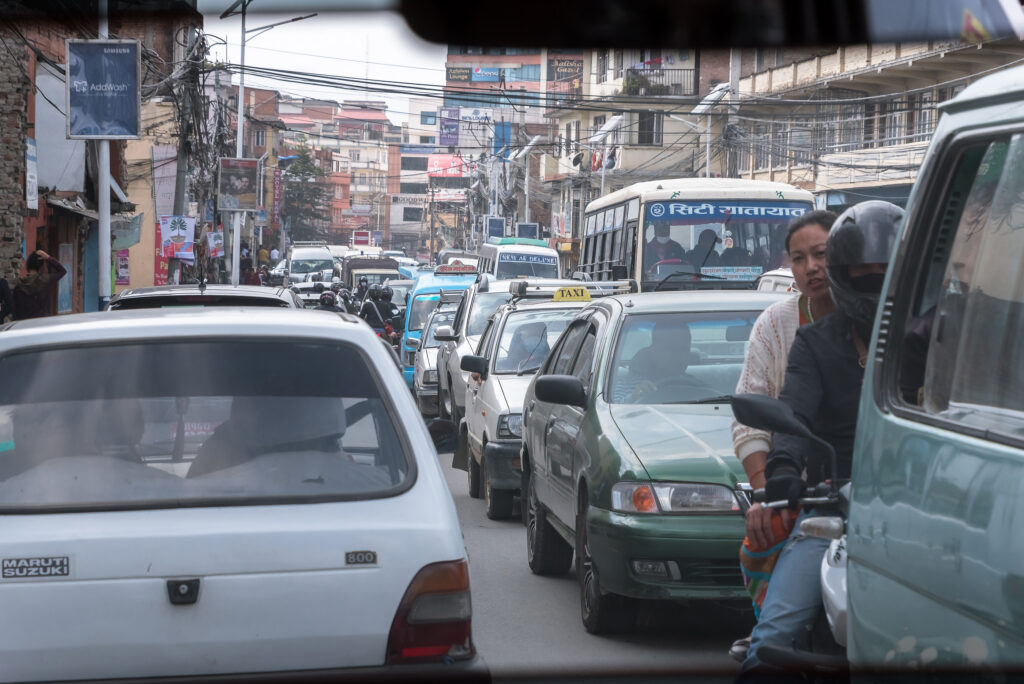
Nothing in life has prepared me for this Friday afternoon rush-hour drive from Tribhuvan International Airport to my hotel in the Kathmandu tourist suburb of Thamel. On these dusty streets, pedestrians, canines, goats, motorbikes, scooters, rikshaws and buses perform a death-defying dance.
With frail nerves I arrive at The Thamel Eco Resort. It’s a neat, friendly hideaway from the frenetic streets of Kathmandu.
On the second morning, our hiking group is finally together, and we leave for the airport. A nervous excitement fills my stomach.
The day’s plan? Catch our morning flight to Lukla, then hike 8 kilometres to Phakding.
Due to the weight limitation, I wear in the stifling heat my wind proof jacket, boots, hiking gear and camera bag. Every pocket is crammed with necessities to reduce my bag’s weight.
We arrive at a chaotic Kathmandu airport. Flights to Lukla are backlogged for hours due to bad weather and maintenance on the runway. We wait seven long hours in the overcrowded, claustrophobic departure hall.
At 3pm our flight number is finally shouted. We scramble through the boarding gate, onto the bus, and then board the twelve-seat Twin Otter plane. We strap in while the pilots run their checklists.
Then the solitary air hostess boards and announces matter-of-factly,
“Unfortunately, the flight is cancelled. Bad weather at Lukla. Will you please disembark”
We all stare at her in disbelief, waiting for her to follow with, “Only joking!”
No humour on this flight.
She instructs us again to disembark and with a collective groan we unbuckle and leave the aircraft.
We’ve effectively lost a day if we can’t make it to Lukla today. A cancelled flight doesn’t mean you’re first in line the next day. You fall to the back of the queue.
Helicopter
Nga-wang, our trek guide, suggests a Plan B. It’s already late in the day, but miraculously he finds a helicopter charter.
After a lot of bargaining, it’s an additional US$200 per person.
We’re checked in again and driven to the opposite side of the airport. This time, we’re required to climb onto the scale.
With the sun relentlessly slipping towards the horizon we still wait for an available pilot. I’m starting to resign myself to the fact that we’ll have to return to our hotel in Kathmandu for the night. It’s a sickening thought.
Suddenly we are summoned to a dragon emblazoned Eurocopter standing on the ramp. There’s only space for six passengers, which means Wayne, our tour leader, and Nga-wang must stay behind. They’ll try again tomorrow.
The pilot, Eric, jumps into his seat. By the look of it he’s had a long day. He requests a flight clearance to Lukla. “Negative”, comes the reply from the Control Tower in our headsets. We look at each other. “Not again!” He requests Ramechhap and is fortunately cleared.
Ramechhap is east of Kathmandu and closer to Lukla. We won’t sleep in Lukla tonight, but at least we’ll be out of Kathmandu.
Climbing out over the outskirts of Kathmandu we follow the Trisulu River valley. Visibility is extremely hazy.
Steep mountains rise from the valley floor. These are supposedly only the Himalayan foothills, and I’m already floored by their sheer scale.
Villages lie scattered along the river and on the slopes.
Twenty-five minutes later, well after sunset, we land at Ramechhap. After securing the helicopter we look for a place to sleep.

The next morning, we depart after sunrise. Slowly we make our way out of the haze as we gain altitude towards Lukla, 2740 metres above sea level. The B3’s climb performance makes light work of the full load.
Eric points at some landmarks. Then snow-covered peaks appear through the clouds and haze, towering at least 3000 metres above us. The sheer scale of the Himalayan peaks are hard to comprehend. I sit in awe.
A big part of the Everest experience is the notoriously demanding landing at Lukla, so I’m thankful for the helicopter’s much slower and safer approach speed.
Lukla
It is still early morning, and the temperature drop from Ramechhap to Lukla is a noticeable 15°C. We meet our second guide Asmit and set off to the Himalaya Lodge situated close to the runway.
What to do, though, as our lead guide and tour leader is still absent? After losing half a day, we can’t afford to lose another. Instead of the eight kilometres to Phakding we’ll hike thirteen kilometres to Jorsalle.
Before setting off, I make my first acquaintance with the squat toilet. I’m struck by the realisation that I’ll have to confront this formidable opponent every day.
The water drum and wastepaper bucket are positioned at different points around the hole, requiring a bit of manoeuvring to reach each one.
The procedure is a time-consuming, balancing-act rigmarole.
The idea of having the runs at night in sub-zero temperatures, while navigating this obstacle course, is frightening.
And so, relieved to finally be in the mountains, I take the first step of the trek.
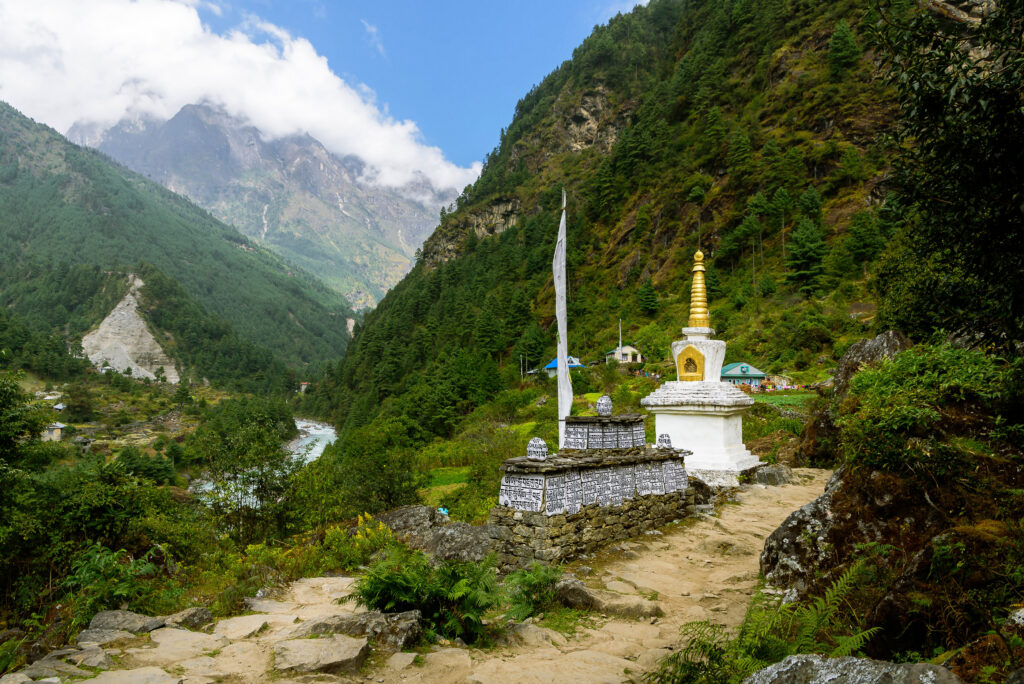
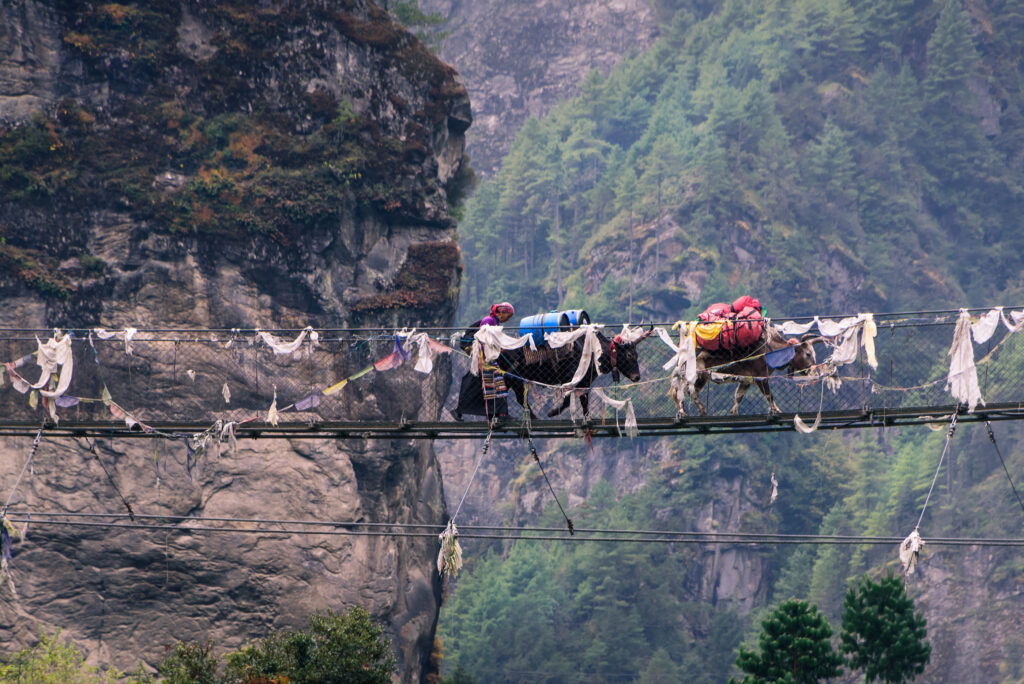
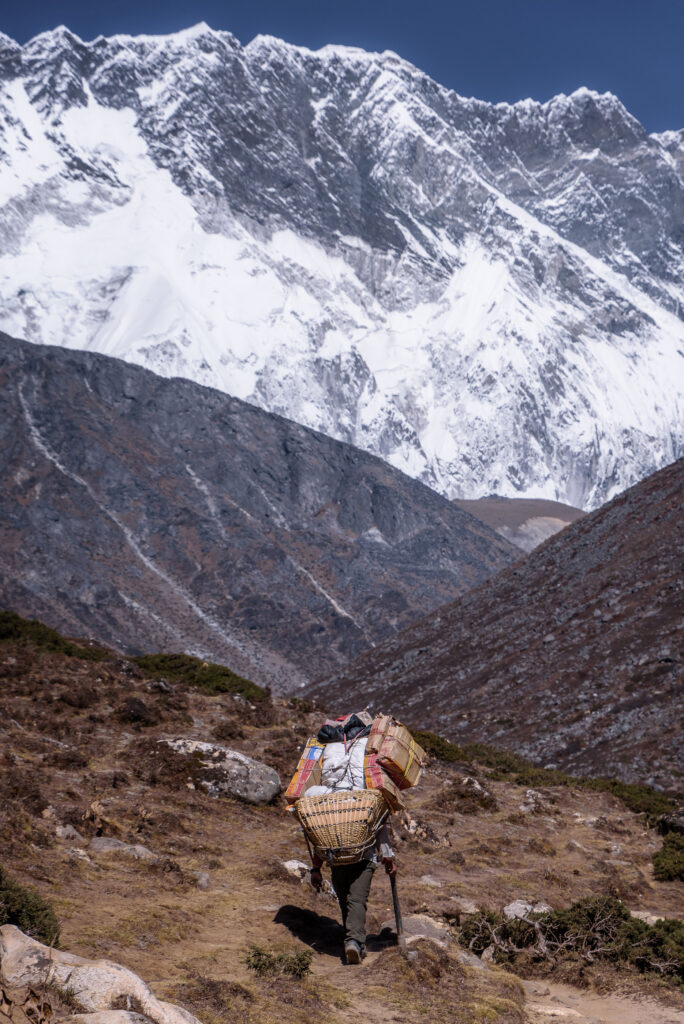
The path follows the Dudh Koshi River, crossing numerous suspension bridges along the way. We soon cross paths with a yak train, obediently trudging along beneath their heavy loads.
I’m taken aback by the mountains’ sheer vertical cliffs. We pass through numerous small villages, all offering accommodation and food.
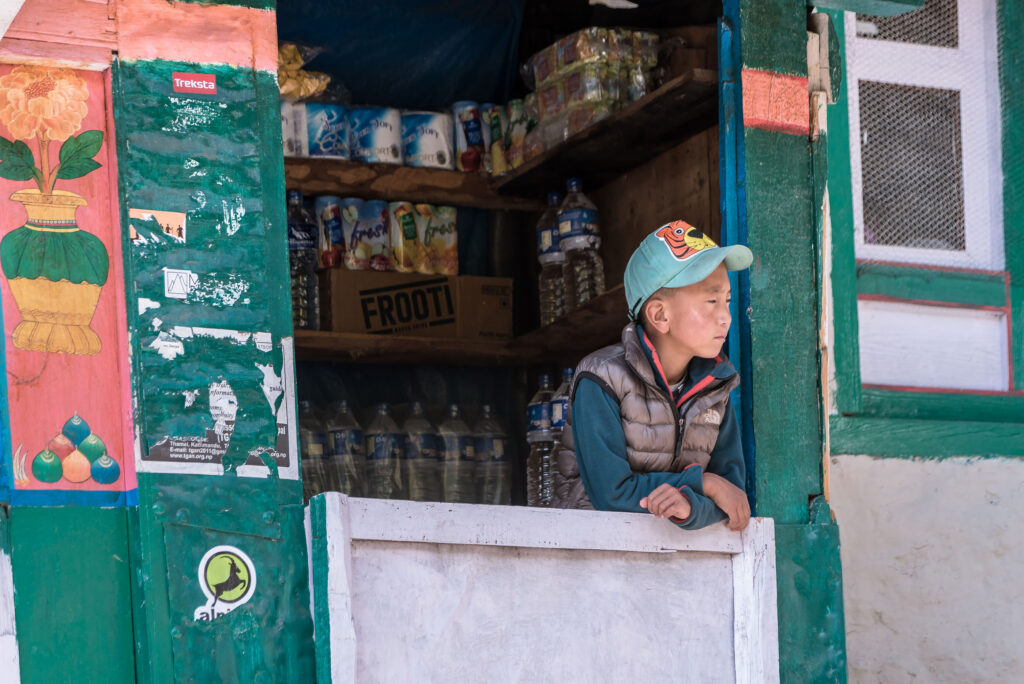
Friendly Nepali faces greet us along the way. Kids play in the village passages, some even helping in their family-run curio shops. The western influence is everywhere to see. Mountaineering down jackets are worn by most locals.
We stop at Phakding for lunch and tea, the first of many on the trip. I settle for a warm, refreshing orange tea. It will become my drink of choice throughout the trek.
We’re constantly advised not to race, but walk at a leisurely pace.
Late afternoon we reach our accommodation in Jorsalle. The tea house is situated on the river. The rushing glacial water makes a tremendous noise. I have my last shower here and we get our first taste of dhal bat.
During the night Wayne, Nha-wang and our three porters finally reunite with us. They had quite a day.
Next morning we continue up the valley and soon we get to the famous Hillary suspension bridge. It looks much higher than what I could remember from pictures on the internet. I dare not look down as I cross the swaying suspension bridge, 410 feet above the river below. After I cross, a group of trekkers is forced to backtrack on the bridge when a herd of yaks decide it’s their turn to cross too. Some trekkers foolishly attempt to shimmy past the beasts on the narrow bridge — something I wouldn’t attempt.
We start the gruelling 700 vertical metre climb to Namche Bazaar and suddenly I start to feel the effects of altitude. The going is slow and I’m regularly out of breath. Umberto, already now established as the strongest climber, pulls me up the hill like a magnet. I know I must slow down, but the competitor in me can’t concede defeat.
A while later we come to a clearing in the trees, and there in the distance, a mere 20 kilometres away as the crow flies, Everest’s summit dome peaks over the Nuptse Ridge.
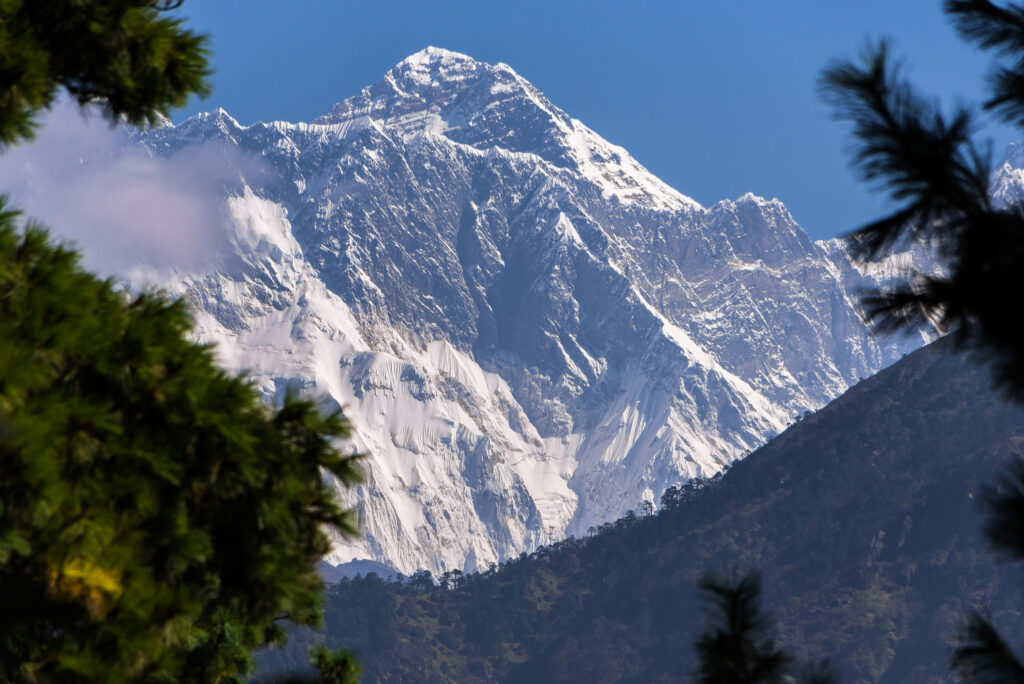
Mid-day, we reach Namche Bazaar, our overnight stop where we’ll acclimatize for a day at 3400 metres and buy the last bits of gear we need. This is officially the highest I’ve hiked and boy, am I feeling the effects.
Above 4000 metres
It’s a cold, dreary and overcast day in Namche. From the town centre to our tea house is a steep set of probably 50 steps. This becomes an obstacle throughout the day.
The next morning, we set off for Deboche, further up the valley.
After an hour’s hiking, the morning peak-hour traffic of tourists starts to fan out, and I begin to relax and enjoy the views of Thamserku Peak across the river.
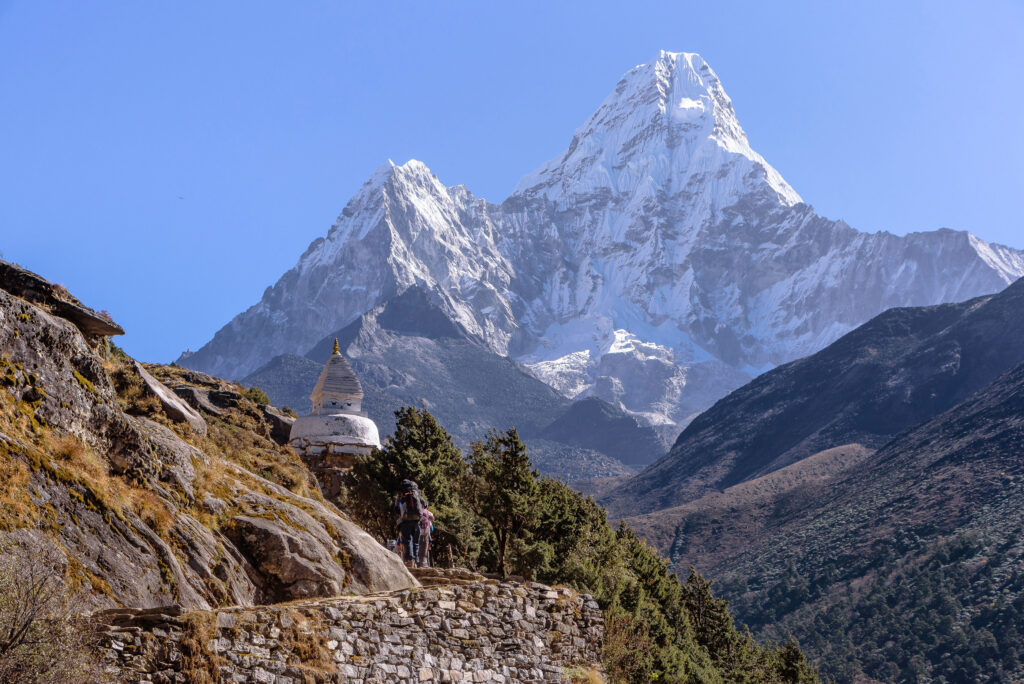
Soon, Ama Dablam comes into view. With its soaring ridges and steep faces, this beautiful mountain is sometimes referred to as the “Matterhorn of the Himalayas”.
We pass the Tenzing Norgay Memorial stupa with Lhotse and Everest in the background.
High Mountain Bakery Café near Khumjung reveals panoramic mountain views. Surrounded by famous peaks, I bake in the sun while sipping fresh tea.
Afterwards, we descend through a forest to the river. I wince at the thought of giving up these precious metres in altitude.
I brace myself for the climb to Tengboche. Only two kilometres long with a 500-metre elevation gain, it feels endless. I use the regular breathing stops to photograph magnificent Kangtega across the valley.
At last, we top out at Tengboche Monastery, but are too late to receive a blessing from the monks.
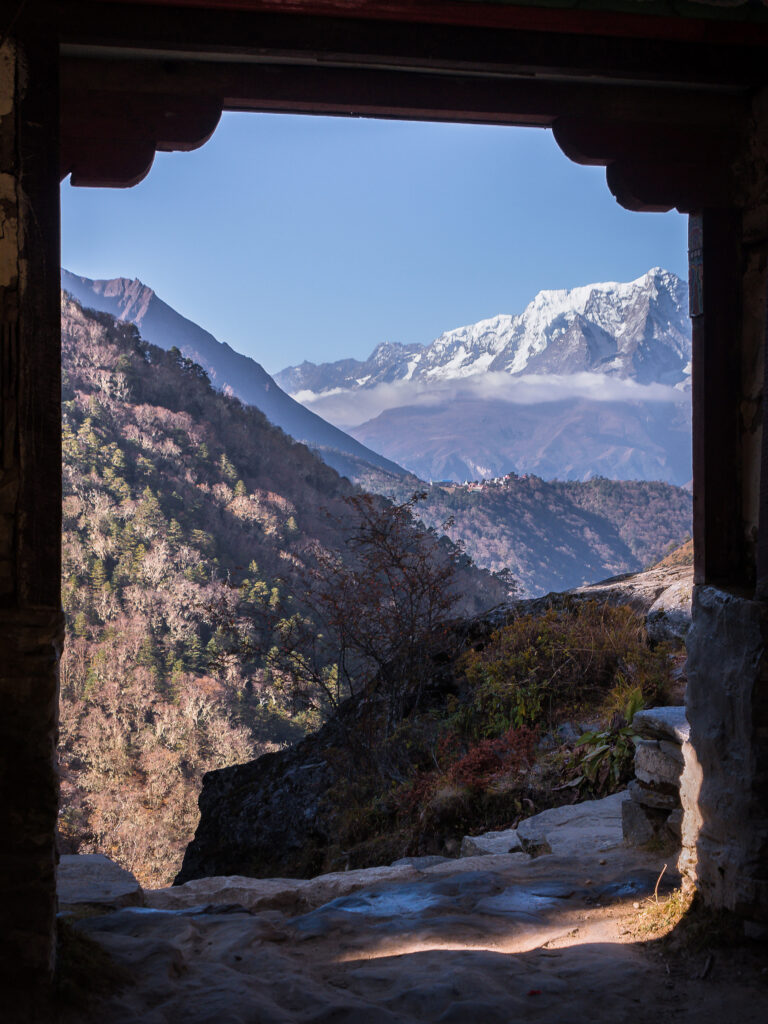
Food and warmth are promised at Paradise Lodge, so we make our way down the hill to Deboche.
I struggle to sleep. Shallow breathing and gasping awakenings make rest elusive. At 3,700m, it’s my first real taste of altitude insomnia.
At dawn we set out for Dingboche — an eight-hour trek with 700 metres of altitude gain. The trail winds through moss-draped rhododendron forests, crosses suspension bridges, and eventually opens into alpine meadows beneath the watchful gaze of Ama Dablam.
Beyond the tree line
At 4,000m we cross the tree line. Every step is slower, every breath shorter, and the scenery keeps getting better. Avalanche scars from a recent earthquake snake down the slopes, and the air grows thin and crisp.
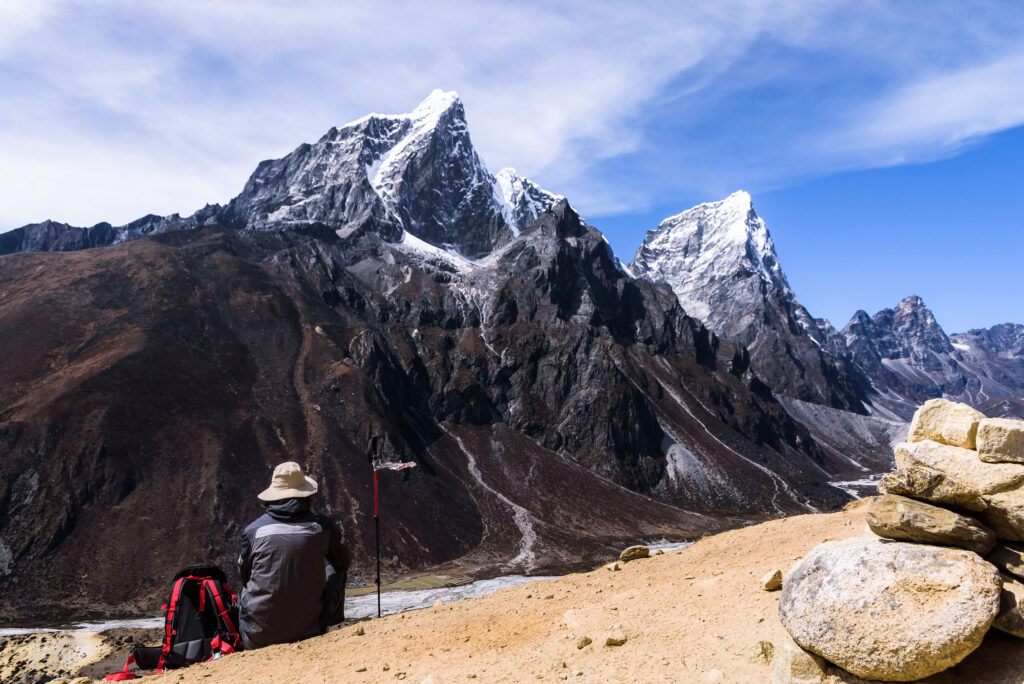
We arrive in Dingboche as the sun sets — a picturesque village surrounded by Ama Dablam, Taboche and Lhotse. The Moonlight Lodge is the best of the trek so far — warm hosts, western toilets (sort of), and rooms drenched in afternoon light.
The next morning, Des, Hein, Chris and Asmit must be up at 4am to climb to the highest viewpoint of their trip.
I make use of the acclimatization day to wash clothes. I’m sure my aroma gives the yaks a run for their money.
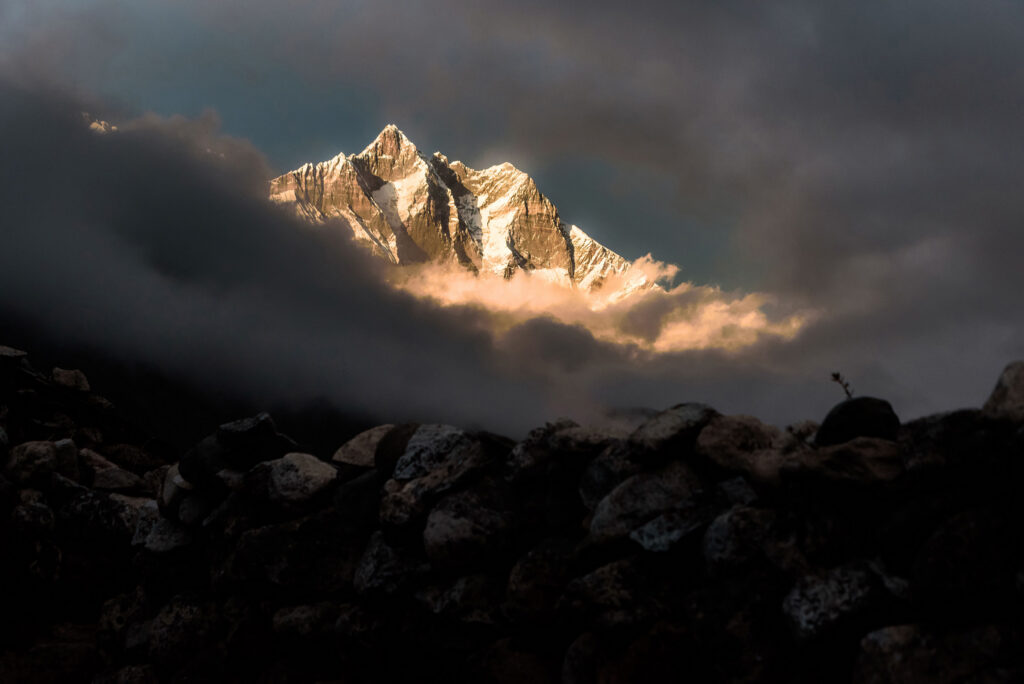
We’re treated to a spectacular sunset. Lhotse’s golden-lit southern face reveals itself through the swirling clouds.
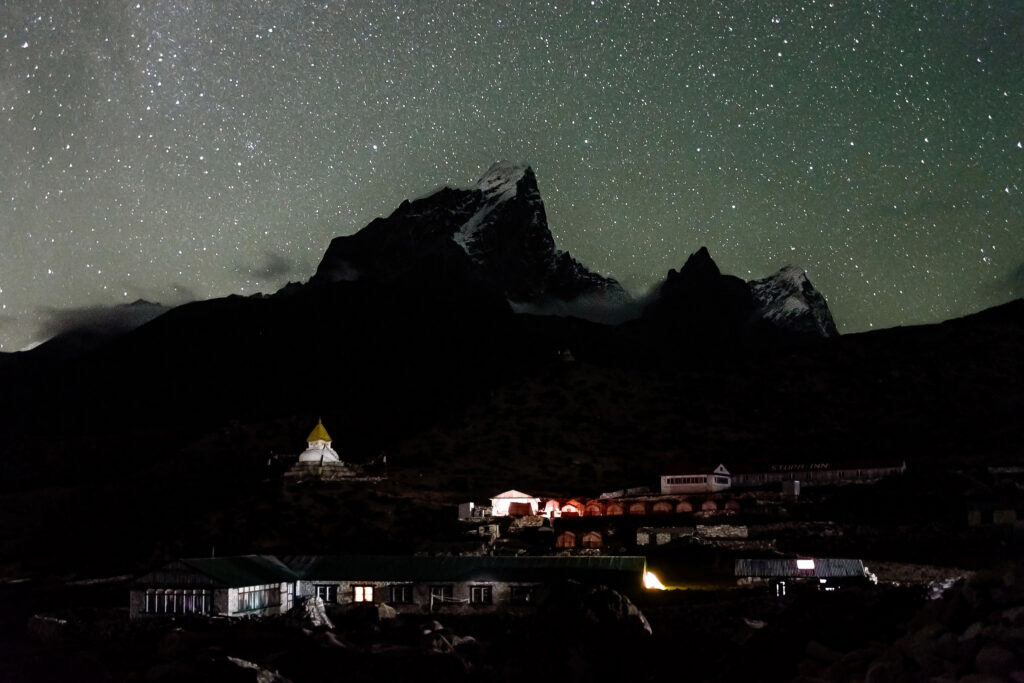
The next morning, we say goodbye to Asmit and our three departing comrades. Secretly I’m thankful to have changed my itinerary to EBC. I’m not ready to descend yet.
We head up to Lobuche.
Fatigued, I will my feet to move. A sniping wind blows into our faces. Another 600-metre elevation gain lies in store. Looking back, I’m astonished that it took us a full day to complete the 12 kilometres.
I’m mesmerized by near-vertical Cholatse, rising 1,700 metres from the turquoise Chola Lake. My eyes are constantly drawn to it.
We lunch at Dughla. The next challenge stares us right in the face: the short but steep 250-metre Thukla Pass to the Everest memorial and the start of the Khumbu Glacier moraine.
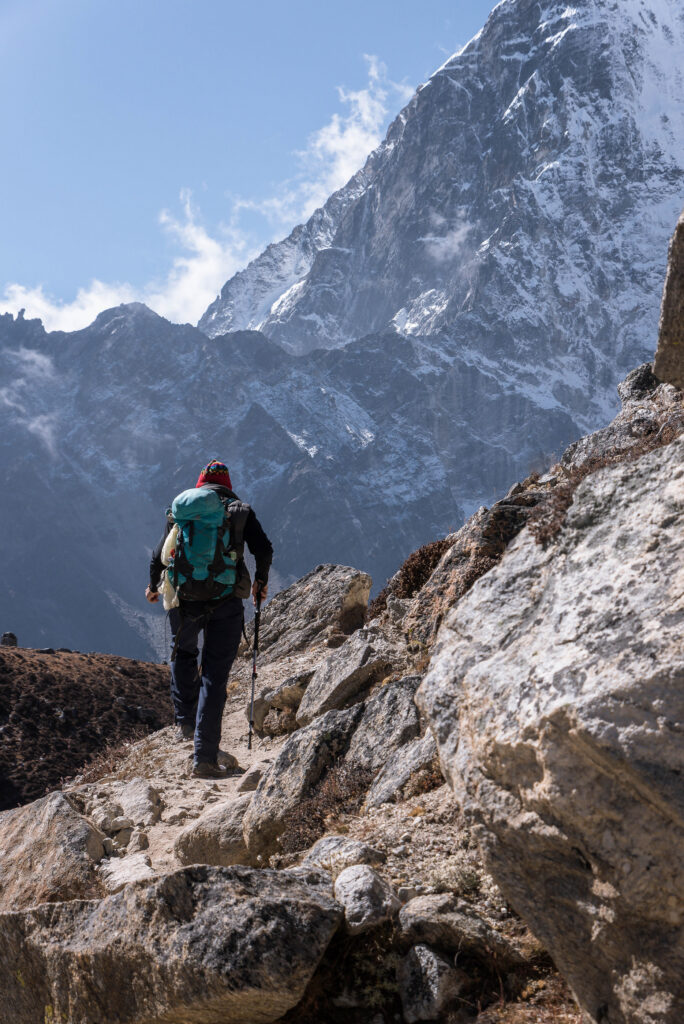
To scale any uphill at this stage requires some serious self-motivation. My intention to walk 20 steps before a rest break is reduced to five. The gradient is brutal.
Umberto seems unfazed and relaxed as he scrambles past me. I convince myself it’s because he doesn’t carry a camera.

The memorial is a sobering place.
A solemn cluster of stone chortens and plaques, it’s dedicated to climbers and Sherpas who lost their lives on the mountain.
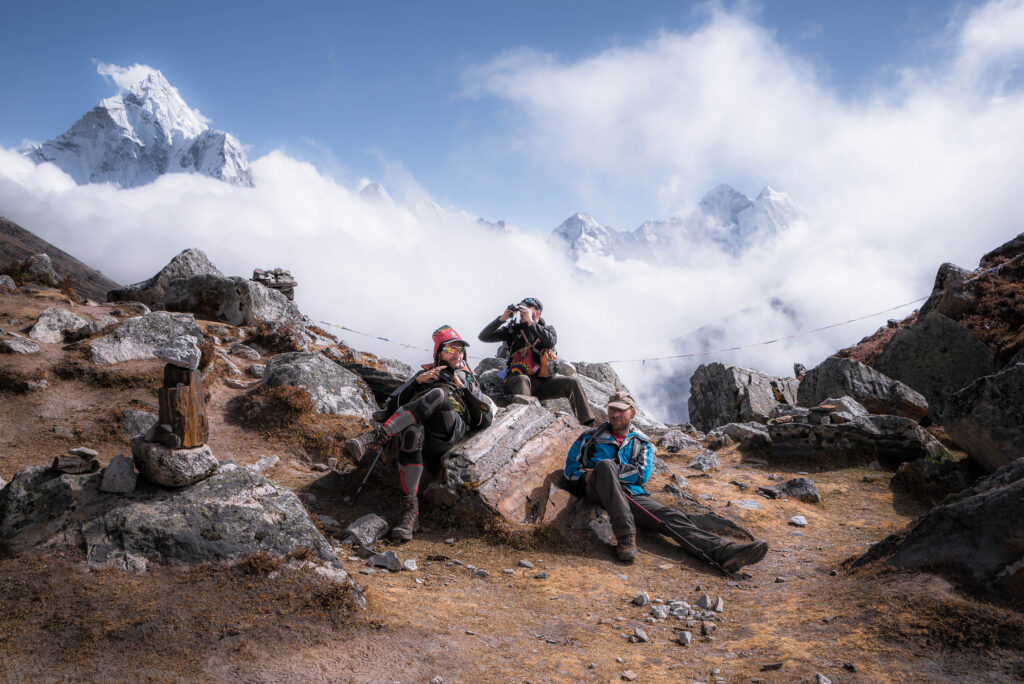
Soon the cold wind hurries us onwards, and we enter a new world: the Khumbu Glacier. It consists of rock, ice, glacial water and precious little oxygen. It’s stark and menacing. Apart from ant-like humans on the trail, no life seems to exist here.
Eight kilometres ahead, an amphitheatre of chiselled rock and ice signals the turning point of our trek and the border between Nepal and Tibet.
Two hours later, we plod into Lobuche’s underwhelming Hotel Peak XV.
After sharing a room with Des for the first section of the trek, Wayne is my new roommate. He is a colourful, affable character, always busy with something. It’s comforting to have an experienced leader on the team. Always joking, few things get him down. His positivity really helps me in these trying conditions.
The building feels makeshift. Every movement and sound seems amplified in the tiny room. The toilet cubicles are a wet, messy affair. The tearoom is stuffy and cramped. Water is expensive. Internet connection is non-existent.
Maybe I’m not feeling too well?
I feel irritated and restless.
I’m too tired to even take off my hiking boots or wet clothes, never mind photograph the surroundings. I can’t fall asleep. Exasperated, I finally force myself out of bed to have a miserable wet-wipe wash before night falls.
As I lie in bed after dinner, I can’t help but yearn for my creature comforts. First prize would be a decent toilet and uninterrupted sleep. But first, we need to climb higher…
Everest Base Camp
After another fitful and freezing-cold night, we leave the next morning for Gorak Shep, the last village before we reach EBC.
It’s a long day of rock hopping. Hikers crowd the single-lane footpath.
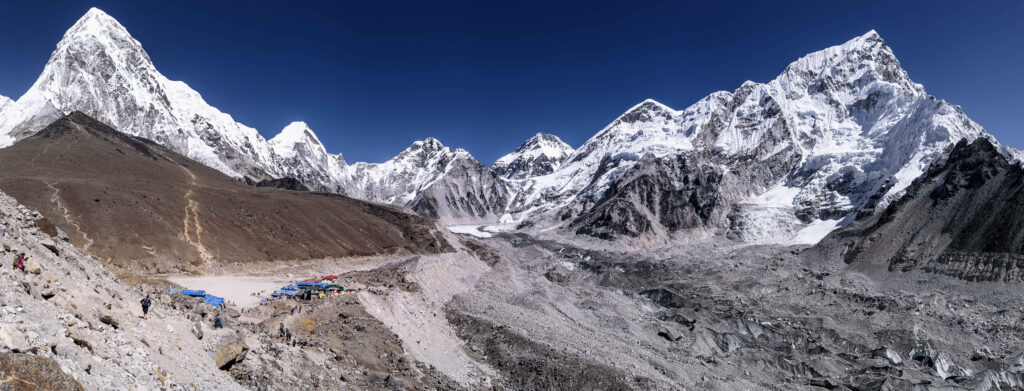
After lunch at Gorak Shep, I’m dog-tired as we set off for EBC. The process of stopping, unzipping the camera bag, pulling the camera out, taking a photograph and putting it away again seems unnecessary. At the time, it doesn’t bother me.
I’m lethargic, with a throbbing headache. Foolishly, I blame it on dehydration. Water is expensive in this part of the world.
Wayne, Ryan and Umberto seem to be enjoying themselves. I’m not.
After painfully slow progress, we finally make it to EBC.
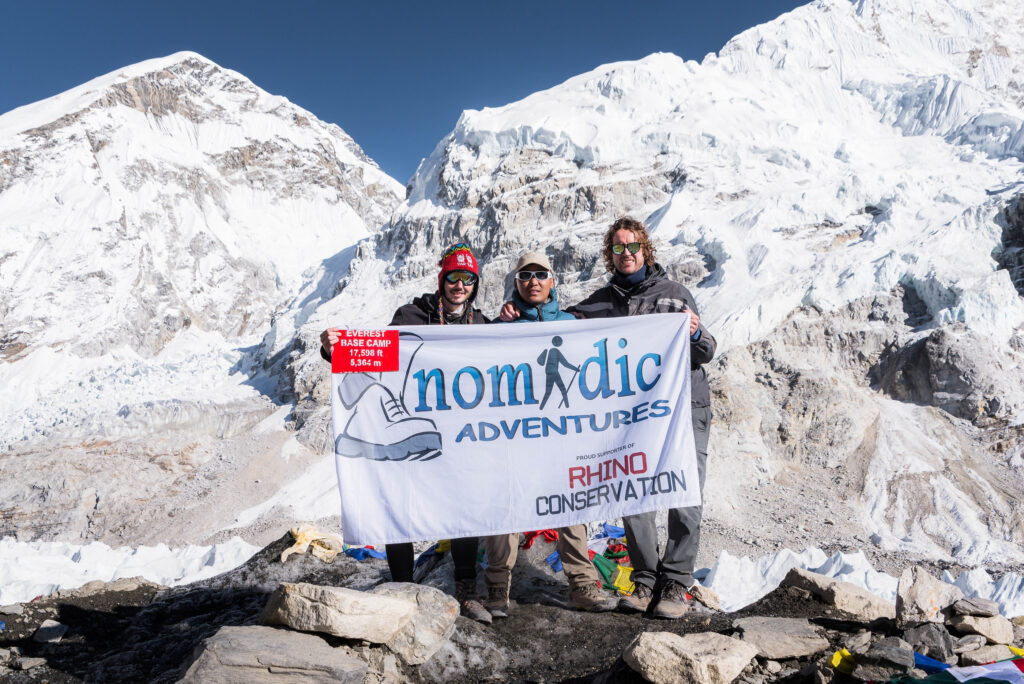
As it is not climbing season, there aren’t any tents to be seen. Situated adjacent to the Khumbu Glacier, I look across the glacier towards the fearsome Khumbu Icefall. It occurs to me that if you were to climb Everest, the climb only starts now.
We pose for photos. The moment feels more symbolic than triumphant. A Japanese couple gets engaged.
The human body is not designed to live here. Without fanfare I head back to Gorak Shep.
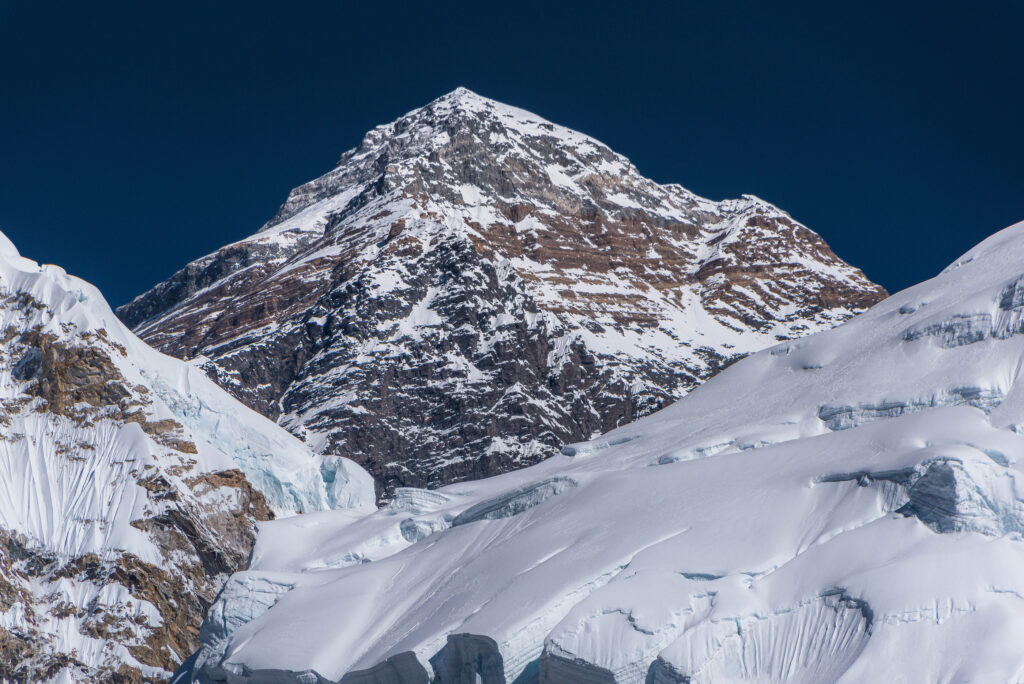
Wayne and I are allocated a windowless two-by-three-metre room, barely big enough to stand in and with no space to unpack our bags. Outside lies an extraordinary mountain landscape. We can’t see any of it. After some protest, we’re upgraded to a better room. We’re grateful.
We tuck in early, as we are to get up at 4am to climb Kala Patthar. It will be our high point of the trip. We’re hopeful of getting a sunrise view of Everest.
Kala Patthar
It’s freezing, yet I feel like I’m about to combust.
“Five steps, then a break,” plead my lungs and heart. After two breathless steps, I have an overwhelming urge to rest again.
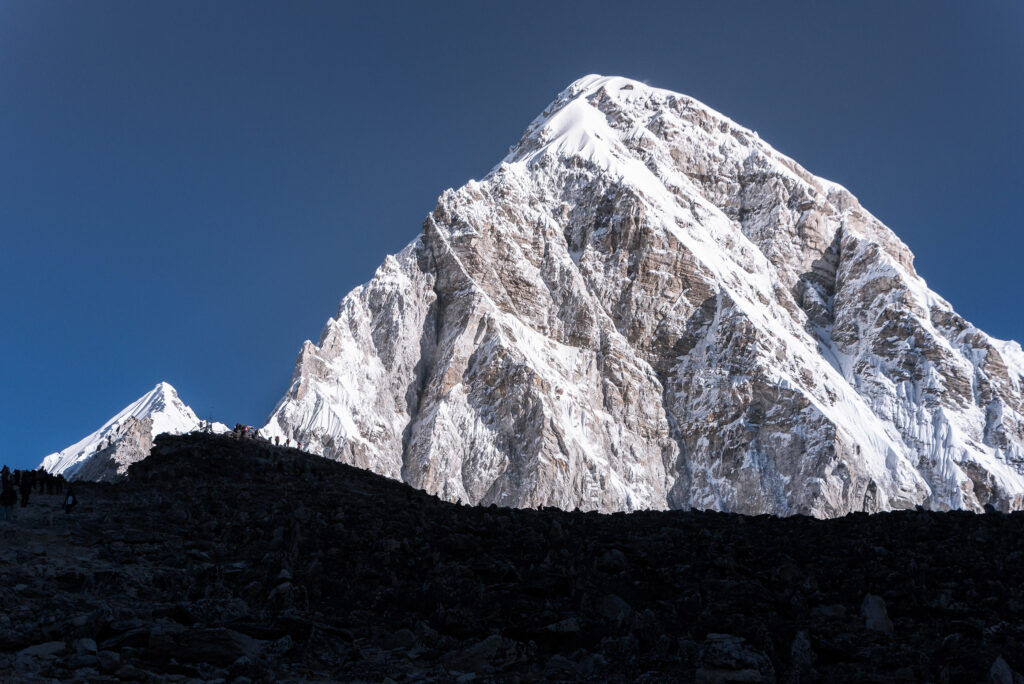
“Keep going. Stay with Nga-wang,” spins like a merry-go-round in my mind.
Each step illuminates more rock in front of my feet in the beam of my head torch. Beyond it, the light is swallowed by pitch-black darkness.
A shiver runs down my spine at the thought of having to endure a lonely night out here in the immense Himalayan landscape.
I look at my watch. Our trekking party of five left Gorak Shep an hour ago, and we have another hour before sunrise. I’m starting to worry that I made a mistake following blindly in Nga-wang’s footsteps. His pace is relentless.
I’m breathing hard, but fortunately my legs still feel strong.
Then, as first light breaks, a surge of adrenaline re-energises me. Every passing minute reveals a little more of the surrounding landscape. To the east, I can see the silhouettes of Nuptse and Everest. Ahead, the immense pyramid-shaped dome of Pumori towers above us.
I want to photograph the scene, but the low light would mean setting up my tripod. With the temperature so far below freezing and time running out before sunrise, I decide against it and push on.
Suddenly, I see small figures on the ridge of Kala Patthar.
At more than 5,500 metres, this popular Everest viewpoint will be the highest place I have ever stood on Earth.
Finally, I make it there.
Real estate for a tripod is at a premium. My fast pace up the hill is rewarded with a small patch of even ground before the crowd squeezes in.
410 metres higher, I suddenly have a completely different viewpoint of the mountains we passed on the way up. To the east, the now-familiar peaks of Ama Dablam, Taboche and Cholatse are set against the skyline.
I dare not shed a tear. It will freeze my eyelids.
To operate the camera, there is no option but to lose the mittens. The -9°C temperature, excluding wind chill, quickly numbs my fingers.
At last, it’s sunrise time, but the Everest massif blocks the sun’s long-awaited warmth for another half hour.
I see the South Col for the first time and am thankful to view it from a safe distance. This saddle between Everest and Lhotse, at almost 8,000 metres, is also Camp 4 on the southern route to the summit of Everest.
The bottom of the death zone.
It looks like hell.
Spindrift is blown at incredible speed across its width, backlit by the rising sun.
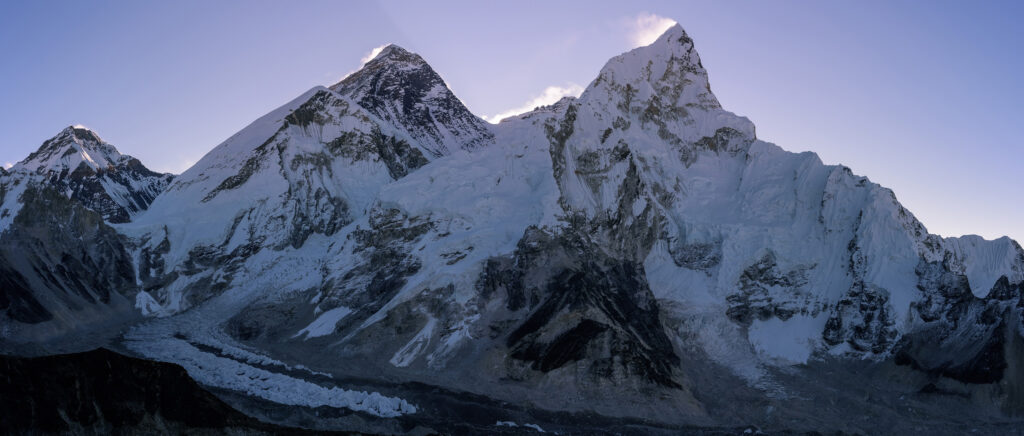
Within a few minutes, it becomes unbearable to take any more photographs.
It’s time to head down to a warm tea house and breakfast at Gorak Shep.
To my surprise, many more hikers pass me on their way up the mountain. Much simpler not to be a photographer. But this morning’s effort was worth every photograph.
Getting Home
But first, we must cross the Kongma La Pass, situated between Lobuche and Dingboche.
Buoyed by our EBC and Kala Patthar success, we set off early to find the trail through the Khumbu Glacier. It is a brutal walk, with every step a balancing act of boulder hopping. Soon we reach the glacial pools in the moraine.
A frustrating hour ensues. We can’t find a path through the pools. There is a spot that looks jumpable, but no one is willing to take the leap of faith.

While scrambling over the rocks, I suddenly feel a sharp pain in my left Achilles. I can still walk, but I immediately know it’s a problem. I still have 50 km to walk to Lukla.
Time is ticking. With no route found through the moraine, the conversation shifts to bailing out via Dughla to Dingboche, bypassing the time-consuming climb.
I have no problem with that. The last thing I want is to be stranded on a high pass at night.
The extra time gives us the opportunity to detour to a viewpoint above Chola Lake. It is the trip’s most picturesque lunch spot. The near-vertical Cholatse behind the turquoise Chola Lake creates a dramatic landscape. The large lake was formed when rock avalanches from Cholatse and Taboche created a dam wall.
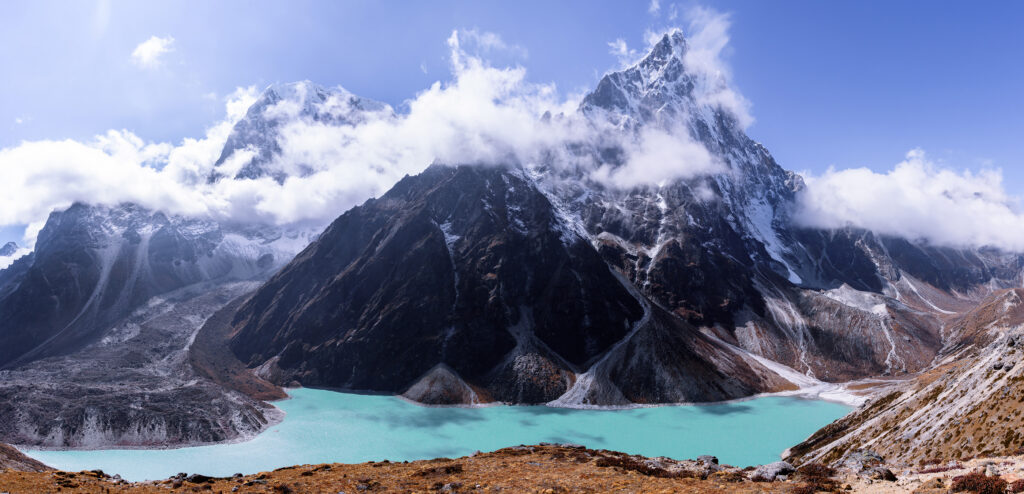
I stay as long as possible before heading lower to Dingboche.
Back at Dingboche, I don’t care about money anymore. I have my first shower in eight days.
It’s glorious.
I’m still craving a good night’s sleep, which I hope will come soon at lower altitude.
The Way Back
The next morning, we practically fly down the mountain. With every step down, I can feel the air becoming easier to breathe.
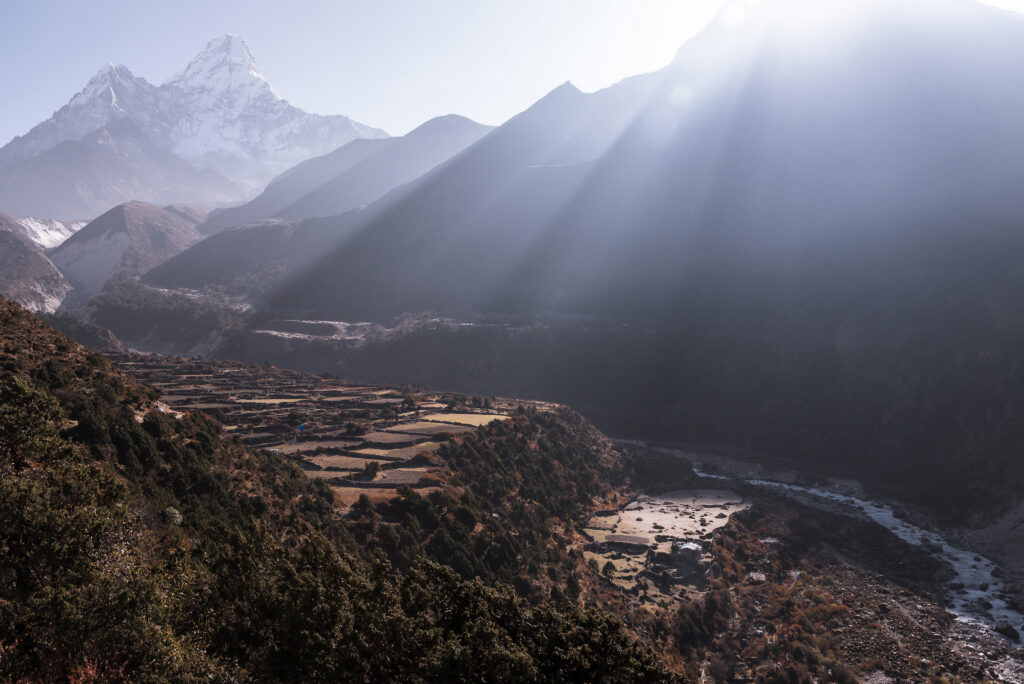
My state of mind has changed. Without the tension and adrenaline of moving towards EBC, I feel distinctly flat. Although the scenery is still breathtaking, the hike feels like a slog.
Wayne organised an extra-day excursion to Ama Dablam Base Camp from Pangboche. Although I’m tempted to join them, I sit it out to rest my heel. There is still a good 25 km to Lukla.
It’s a long day at the tea house. I make my way down to the river to take a few long-exposure shots.
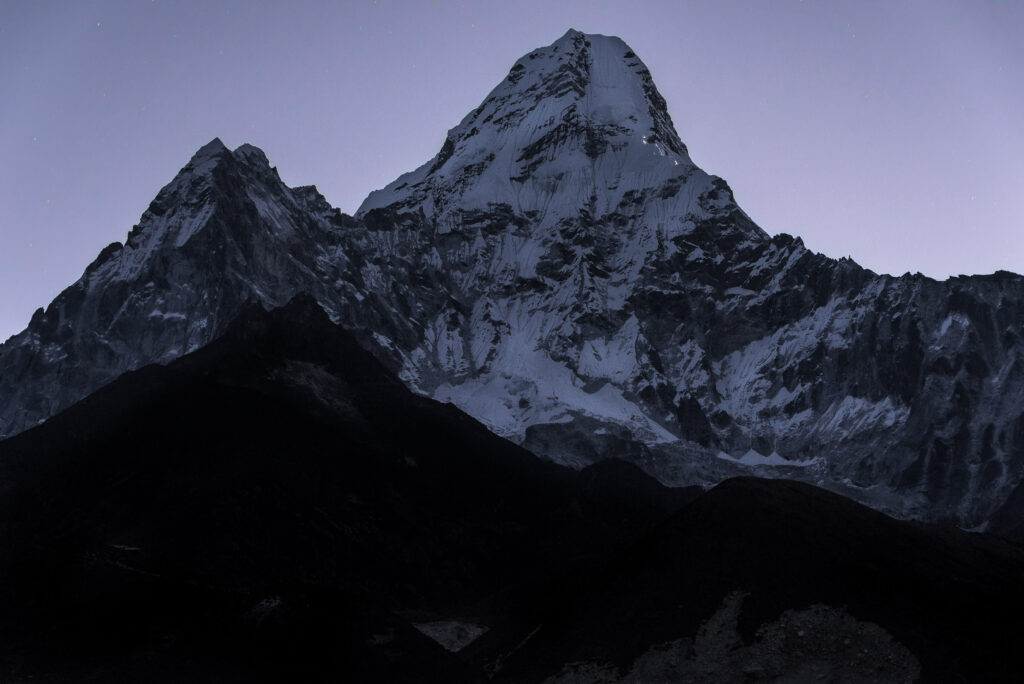
The next morning, I’m up before sunrise to get a last pre-dawn look at the mountains. I follow the line of headlamps on Ama Dablam’s summit slope. What incredible views those climbers must experience.
Suddenly, Wayne comes running at me.
“You locked me in!” he protests.
“What? I closed the door; I didn’t lock it,” I retort.
“No,” he replies. “There’s an outside lock. When you closed the door, it locked, leaving me trapped inside. I also wanted to take photos.”
He proceeds to copy some of my photo ideas. I brush it off, but he clearly doesn’t see the funny side of it.
The walk down to Namche is relaxed. I practically run up the difficult stairs I encountered a week before in Namche. A week ago, they were an obstacle. Now I barely notice them.
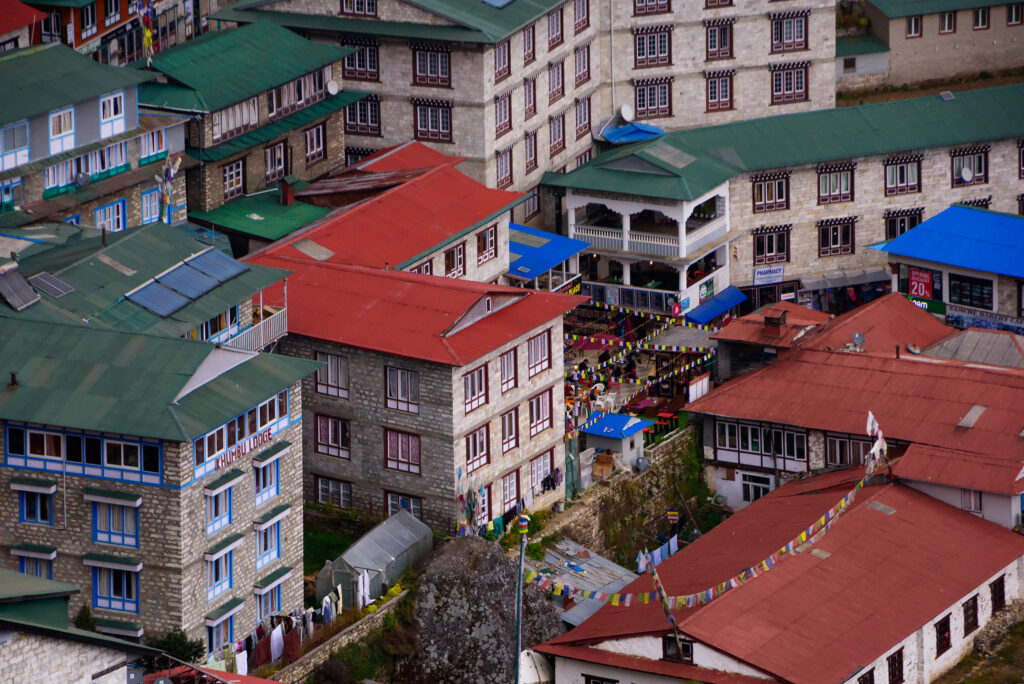
Wayne and I somehow win the presidential room lottery. It is luxuriously spacious in Himalayan terms and has panoramic views of Namche Bazaar. Half forgiven, I join Wayne for his obligatory coffee and cake, and that evening, Ryan, Umberto and I have a celebratory Guinness at what claims to be the highest Irish pub in the world.
We’re slowly moving back to civilisation.
Under 3,500 metres now, I also have the best night’s sleep in over a week.
The next day we tackle the last stretch out to Lukla. True to our trip’s form, it won’t end without a hiccup. There’s weather about, and the flights are delayed. We spend another frustrating and anxious day in the Lukla terminal.
Lukla Airport
This gives me ample time to study the well-drilled Lukla operation.
After an arriving aircraft parks, with one engine still running, both pilots, looking the part with their aviator Ray-Bans and bomber jackets, exit the aircraft to smoke one cigarette while waiting for the handlers to unload and load the passengers and cargo.
I don’t see any fuelling facilities, which explains why the pilots can stand on the apron smoking while the aircraft is being turned around.
Then they board, start the dead engine, obtain clearance, line up and depart.
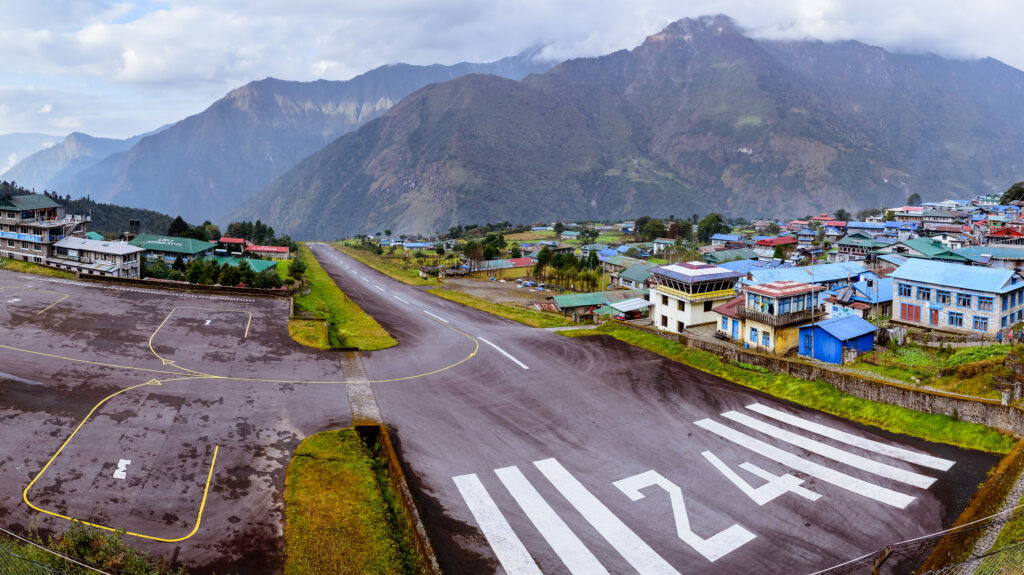
Much later, our flight number is called, and we finally get our chance on the Tara Air Twin Otter. I try not to think too much about the take-off risks at an airport often described as among the world’s most dangerous.
We line up on the runway. At full brakes, the pilot advances both throttles to full power for about five seconds to confirm the engines produce the advertised power. The aircraft strains against the brakes.
Then, when the brakes release, we shoot down the 12% gradient runway.
My hands clench around the seat. At last, we get airborne, but not a second too late. I see the steep drop-off at the end of the runway to the valley below.
The danger is not over. As we climb, we start to flirt with clouds. With this kind of terrain around you, flying into cloud seems suicidal.
Thankfully, we soon enter clearer skies.
What does it even mean?
Nine years later, I often think back to the “before I can’t” philosophy.
The short answer? I’m so grateful to have done it when I did.
Covid struck in 2020, during which I met my life partner. Then life happened.
I’m still relatively young, but my back condition has deteriorated. I now think twice before attempting physical activities.
Would I like to hike the Himalaya again? Of course.
Would I be able to do it? Maybe.
The clock is ticking.